Loading...
Loading...
Loading...
Loading...
Loading...
Loading...
Loading...
Loading...
Loading...
Loading...
Loading...
Loading...
Loading...
Calculation of periods in laytime in cargo ports
The Laytime Calculations module can be located from the menu under Operations.
Create Laytime CalculationFind Laytime CalculationMaintain Laytime CalculationDelete Laytime CalculationCreate Laytime Calculation Dialog
Open the Laytime Calculation module in the Operations section.
Click Create Laytime Calculationin the top right corner.
Fill in all required fields listed below in the Create New Laytime Calculation window.
Laytime Calculation List and Filters
Open the Laytime Calculations module in the Operations section.
There are several options available for you to narrow down what you include in the list view.
Click Create.
Vessel *
Used to filter Vessels
Voyage - Counterpart
Combines the voyage reference and cargo counterpart
Responsible Charterer
Responsible charterer, default to the current user
Cargo Ports
Cargo Ports to be included in the calculations
* Only available when not creating a laytime calculation from the voyage drawer.
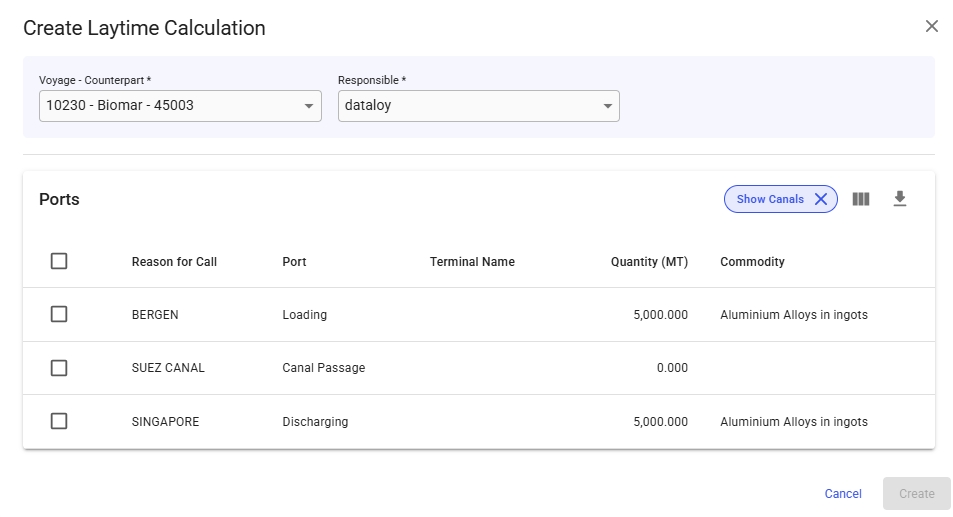
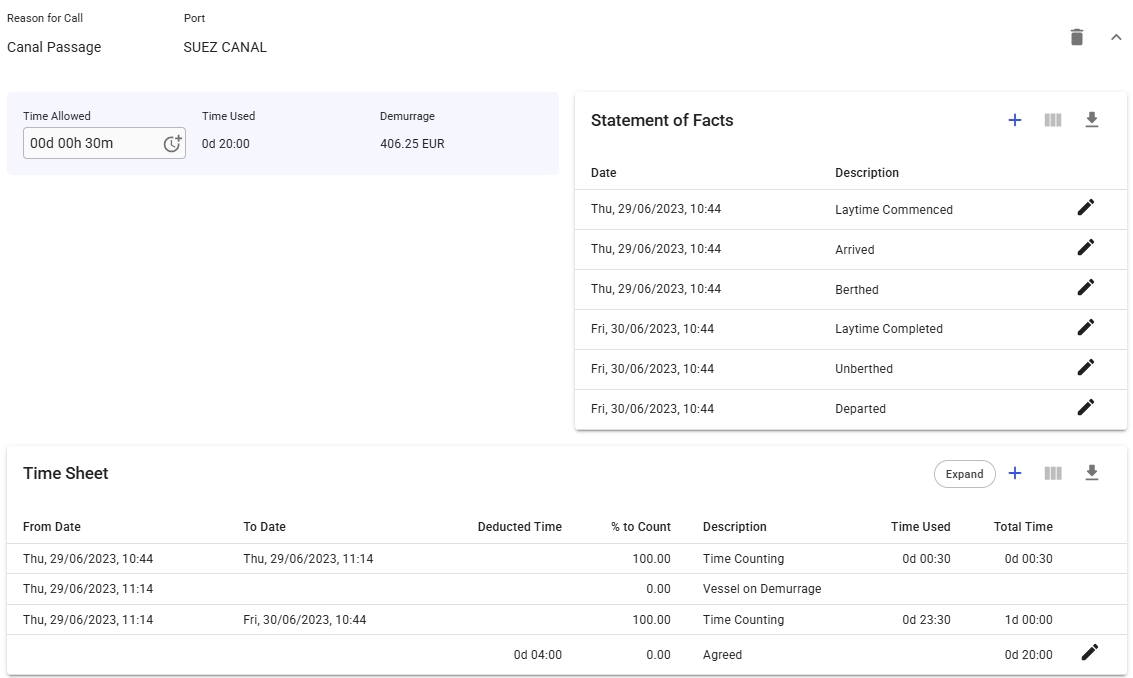
Starting with release 8.10, the system lets you create a laytime calculation for a canal passage; once created, you can add the time allowed and any deductions to register canal demurrage. The time allowed, as well as any time deductions, will not affect laytime calculations at other ports.
Note: As soon as a canal is included, the calculation is marked as reversible, and you cannot change the aggregation type unless you first remove every canal entry from the calculation.
To create a canal calculation you must select the canal itself in addition to at least one port before it and one port after it. For example, in the figure below, Bergen and Singapore must both be chosen as well as Suez Canal.
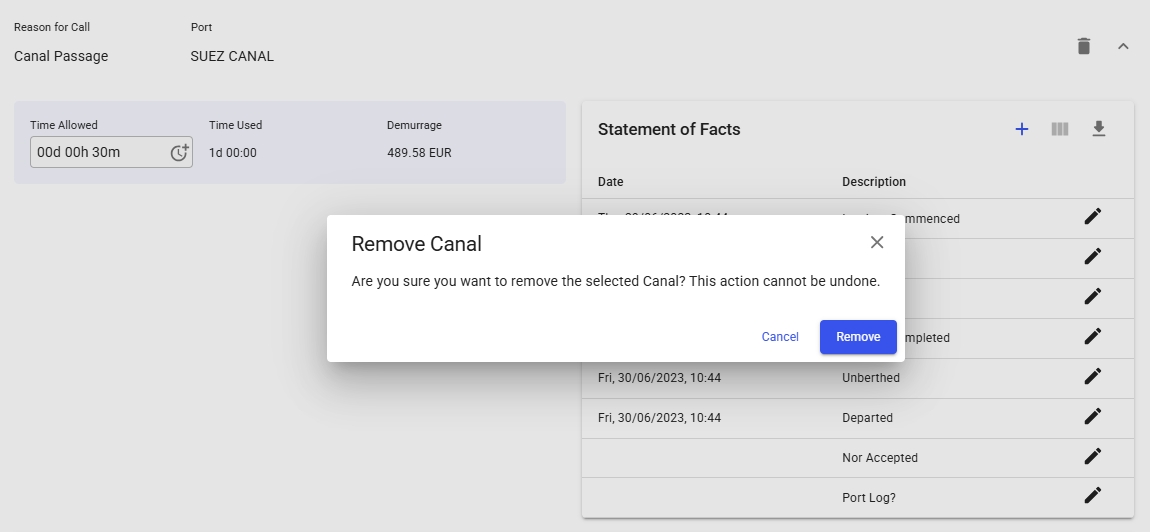
To remove a canal calculation, locate the canal’s section header and click the trash-can icon at the top right. A confirmation popup will ask you to confirm the removal; once confirmed, the canal entry is deleted and its demurrage is deducted from the total.
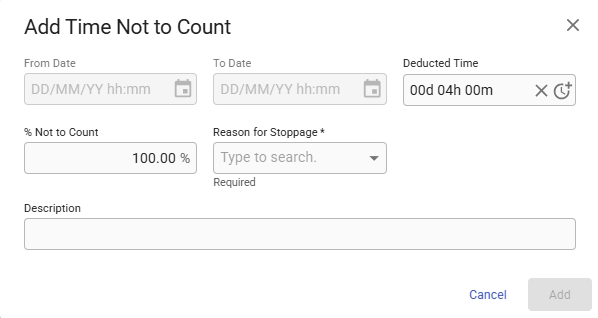
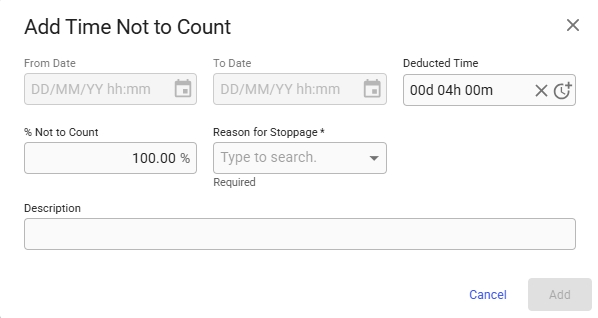
Adding time not to count can be used to control the time used, and therefore, the incurred demurrage. To add one, locate and click, the blue plus-button in the top-right of the Time Sheet. This will open a modal where you can enter the time not to count. To improve the process of adding time deductions, a new days field has been introduced, as seen in the figure below.
Laytime Calculation Panel
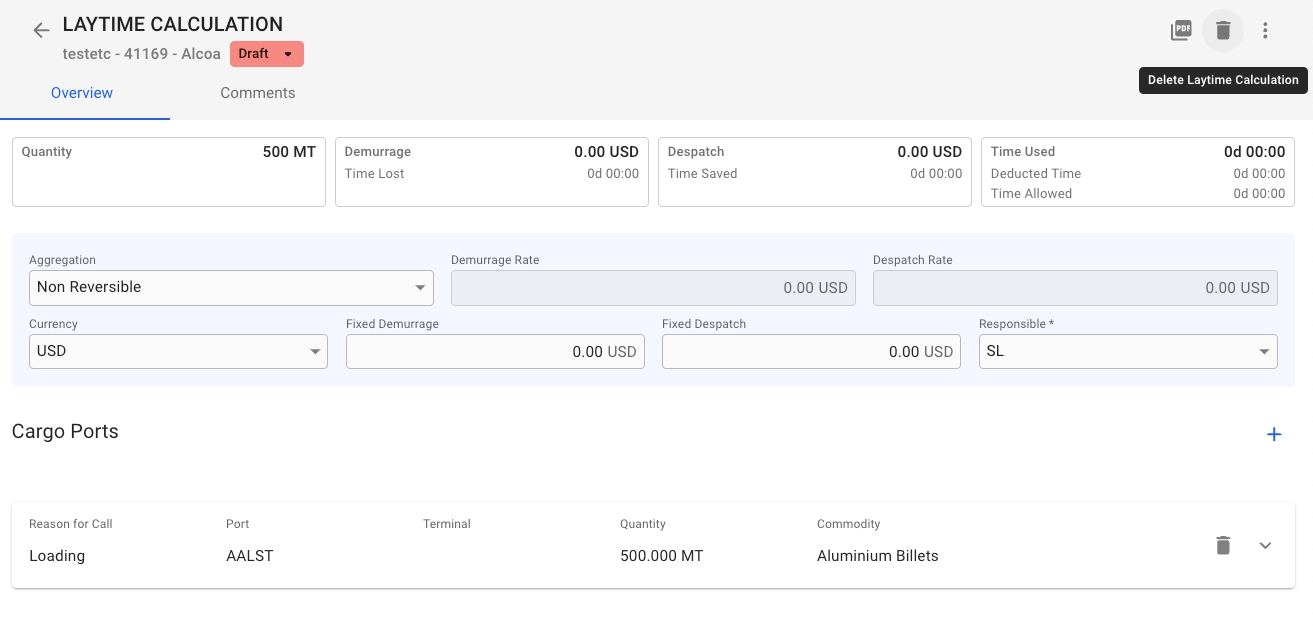
When you have located a laytime calculation, click on it and the details will show in a panel (so called "drawer") on the right hand side. The panel will also open after creating a new laytime calculation.
The panel contains an Overview tab for maintaining a laytime calculation and managing the cargo ports.
Laytime Statement can be printed from the PDF icon top-right in the Laytime Drawer.
StatusDrawer FieldsManage Cargo Ports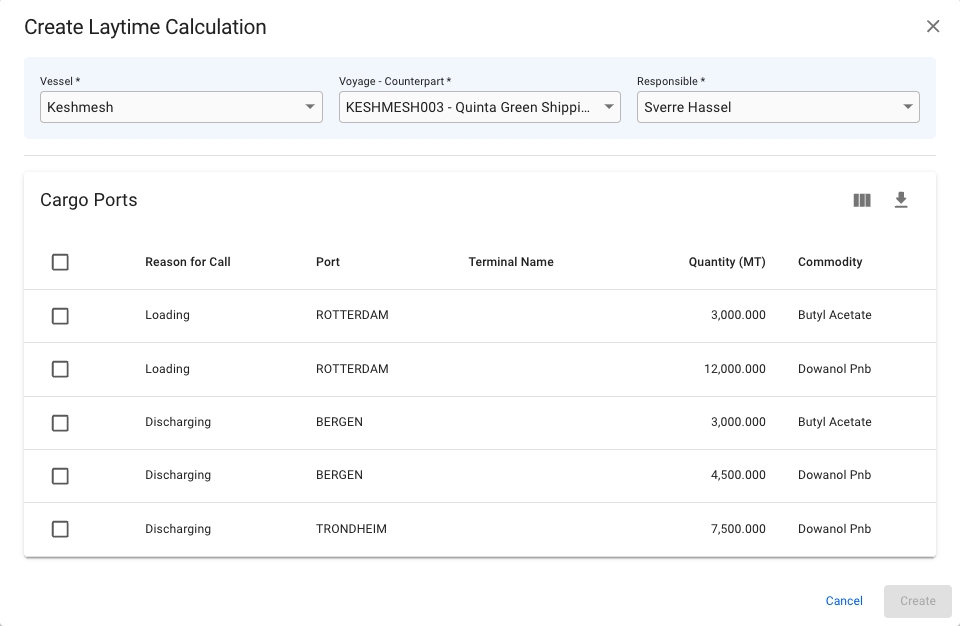
Editing Laytime Calculation Status
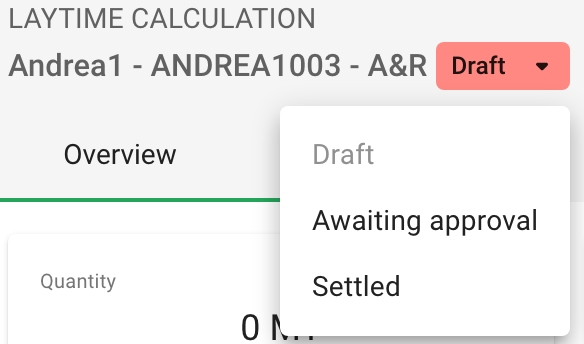
In the header of a selected laytime calculation panel, the current status can be viewed. Clicking on it will activate a dropdown menu and a new status can be selected. A laytime calculation can have one of the following statuses:
Status
Description
Draft
Calculation is being edited
Awaiting approval
Calculation is sent for approval
Settled
Calculation is approved and ready for using
Cargo Ports Panel List
Cargo ports in the panel list are sorted ascending by the cargo port's port call sequence .
Adding a cargo port:
In the cargo ports section, click the create iconin the right corner.
Selected cargo port(s).
Click Create. The new cargo port will appear as a new panel in the panels list
Panel fields
Each panel contains a summary of the cargo port with the following fields:
Reason for call
Port
Terminal
Quantity
Removing a cargo port:
In the panel of the cargo port to be removed, click the delete icon.
Click Remove in the dialog that appears to confirm removal.
By clicking the expand icon on a panel, the following sections can be viewed and managed:
From version 6.39 users with the Laytime Contributor role have the option to delete Laytime Calculations. Deleting a Laytime Calcluation will run the Voyage business logic and re calculate things that have been changed by the Laytime Calculation. • Please notice that Fixed demurrage and Fixed Dispatch that were added in the laytime to all connected ports would NOT be deleted from the ports after the laytime was removed! To delete a Laytime Calculation you must first access the laytime calculation drawer, you can go about this in 2 ways: 1. Open the Voyage drawer that the Laytime Calculation is connected to -> Click on the Related tab -> Pick the Laytime Calculation you desire to delete from the Laytime Calculations list. 2. In the main VMS menu click on Operations -> Laytime Calculations -> Either use the quick filters to find the relevant Laytime Calculation or pick it out from the list. Once you are in the Laytime Calculation drawer you will see a new button was added:
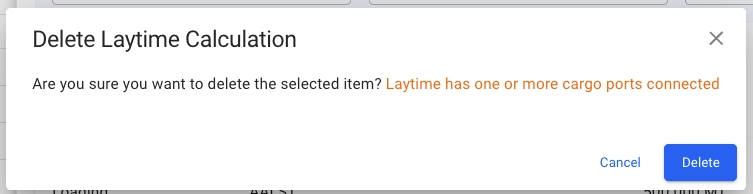
When clicking on the button you will be prompt to confirm/cancel the deletion, if there are any ports connected to the Laytime Calculation a notice will appear about it in the deletion modal:
Once you confirm all Laytime Events will be removed and only the events connected to Port Calls / Cargo Ports will remain and the Business Logic for Voyage would be run to re-calculate changed to the Voyage.
Commodity
List Of Events
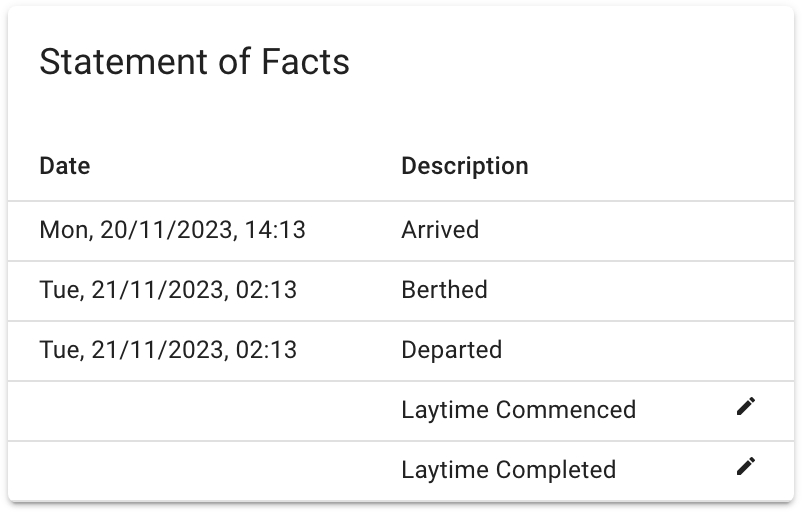
When expanding a cargo port panel, the statement of facts section can be found. This section contains a list of events imported from both the cargo port and the port call port log. You can control which events are shown here by going to Master Data -> Events. Here you have a list of events (More can be added with the blue + icon), here is a small example of some of the events that can be found there:
Event
Description
Arrived
Date of arrival to cargo port
Berthed
Date of berth
Departed
Date of departure from cargo port
You can find more information regarding events here: . Please note that only events fitting the vessel type in question will appear here. More information can be found in the provided link.
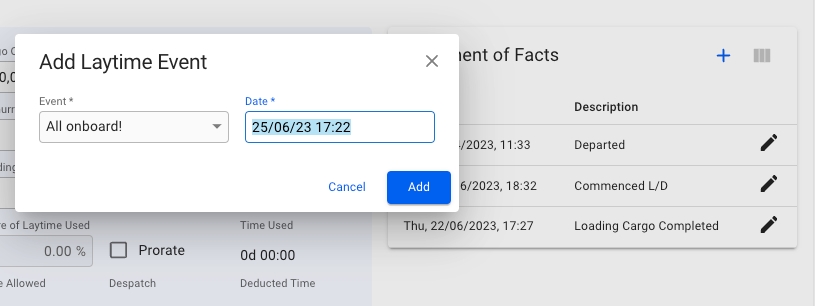
To add an event click on the blue + icon, select the event and date (both required) and click Add.
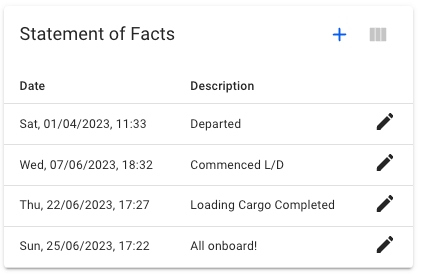
After confirming you will see the new event added to your Statement of Facts list for this port. Your selected new event should appear with the selected date and time:
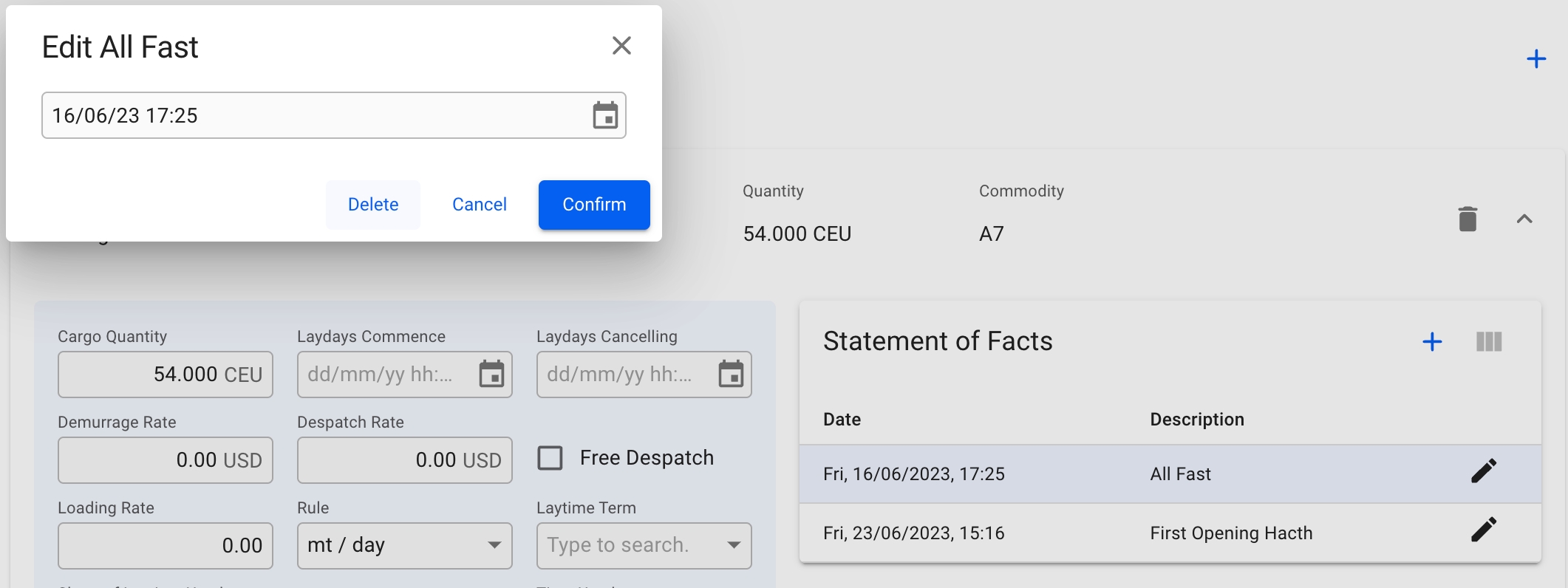
To edit or delete an event simply click on the the row that contains it, Here you can edit the date or select delete in the modal that appears and confirm - Note that this will delete it from the Statement of Facts list but NOT from the port log event list in the port call drawer while editing the date will effect both locations.
Laytime Calculation Drawer Fields
The top section of the overview tab contains key information about a laytime.
The next section contains the following fields that can be edited.
Rate of despatch
Currency
The currency of the laytime calculation
Fixed Demurrage
Fixed demurrage for the laytime calculation
Fixed Despatch
Fixed despatch for the laytime calculation
Responsible Charterer
The responsible charterer for the laytime calculation
A laytime calculation panel also contains a section for managing cargo ports:
Fields
Description
Aggregation
Type of aggregation
Demurrage Rate
Rate of demurrage
Despatch Rate
Laytime Commenced
Date laytime period starts
Laytime Completed
Date laytime period ends

Cargo Port Related Fields
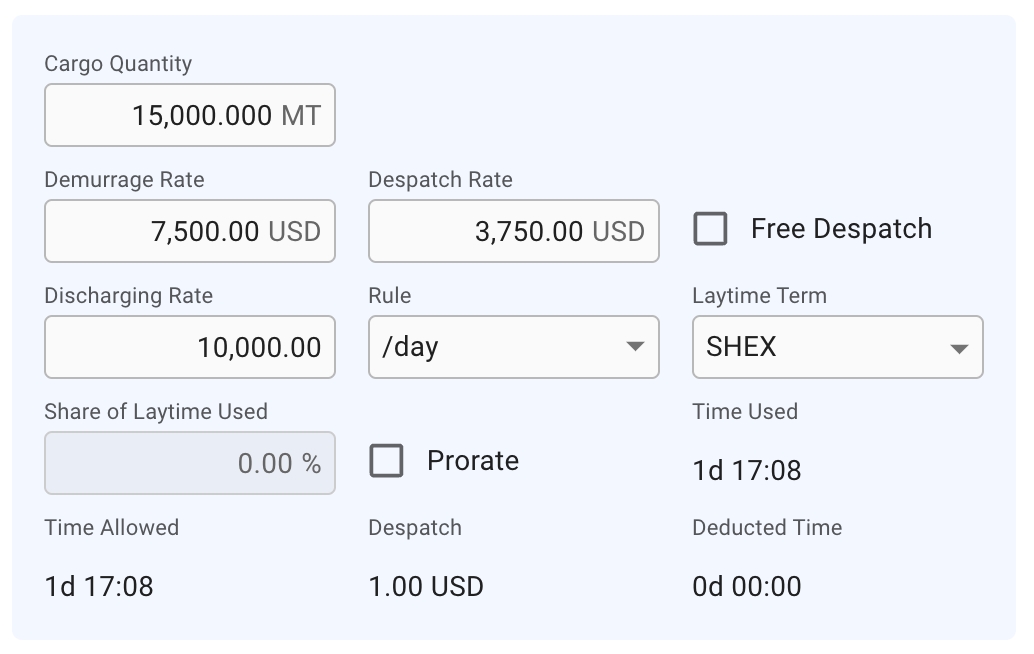
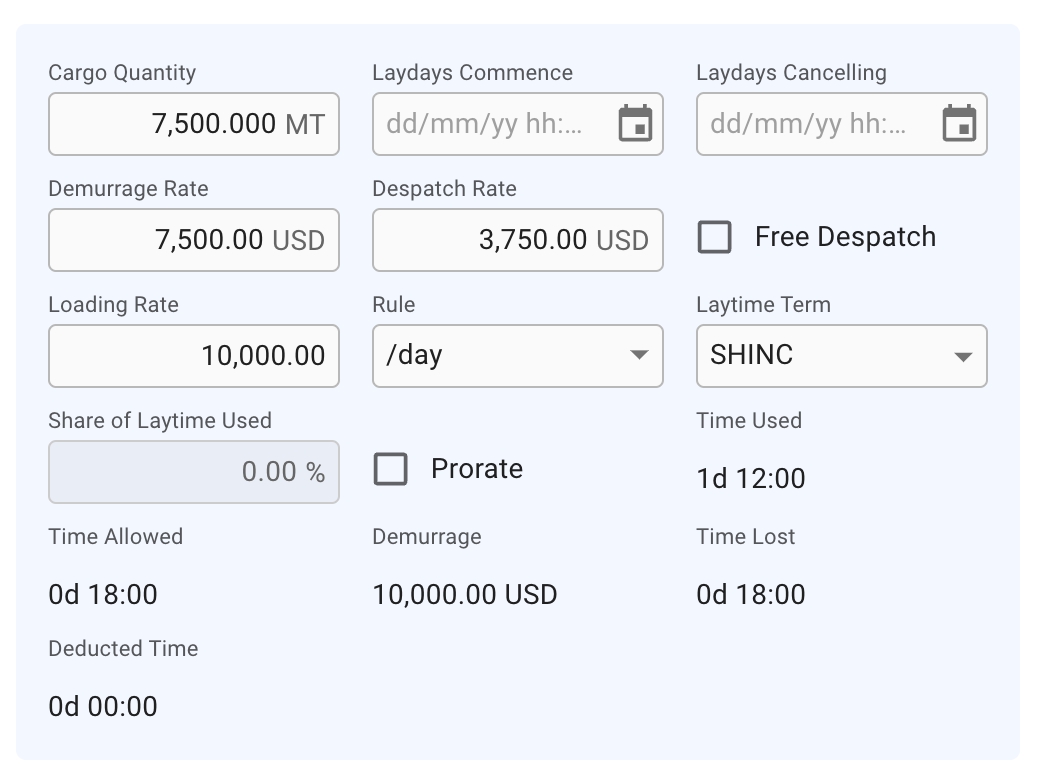
When expanding a cargo port panel, a section for displaying and editing certain fields of the cargo port can be found. The number of fields visible depends on the type of port call, aggregation and more.
Cargo Quantity
Shows the total cargo quantity on the cargo port
Laydays Commence
Laycan From date of Cargo (Load Port only)
Laydays Cancelling
Laycan To date of Cargo (Load Port only)
Describes how you can synchronize events and deductions for Relet & Spot cargo pair in laytime calculations
It is now possible to synchronize events and deductions (not to counts) between a relet, internal, and the corresponding spot cargo.
This reduces the manual effort needed when reletting a cargo since you no longer have to copy the events and deductions manually.
Functionality Availability Criteria:
Minimum of two Laytime Calculations required.
Cargo ports must belong to the same port call but be associated with different cargoes.
Cargo types should differ, categorized as SPOT, Relet, or Internal.
When synchronizing the relet, internal, or spot cargo, all, as well as the events, will be copied from the corresponding cargo.
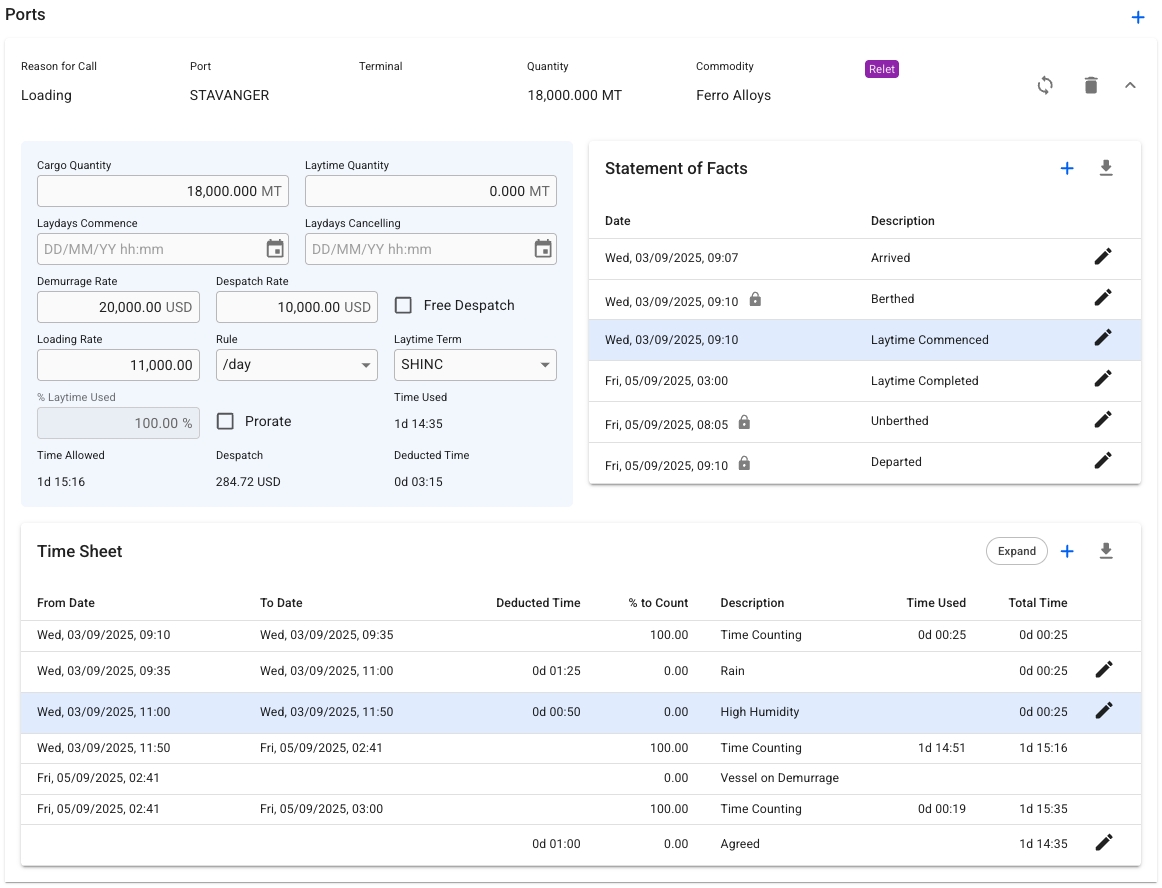
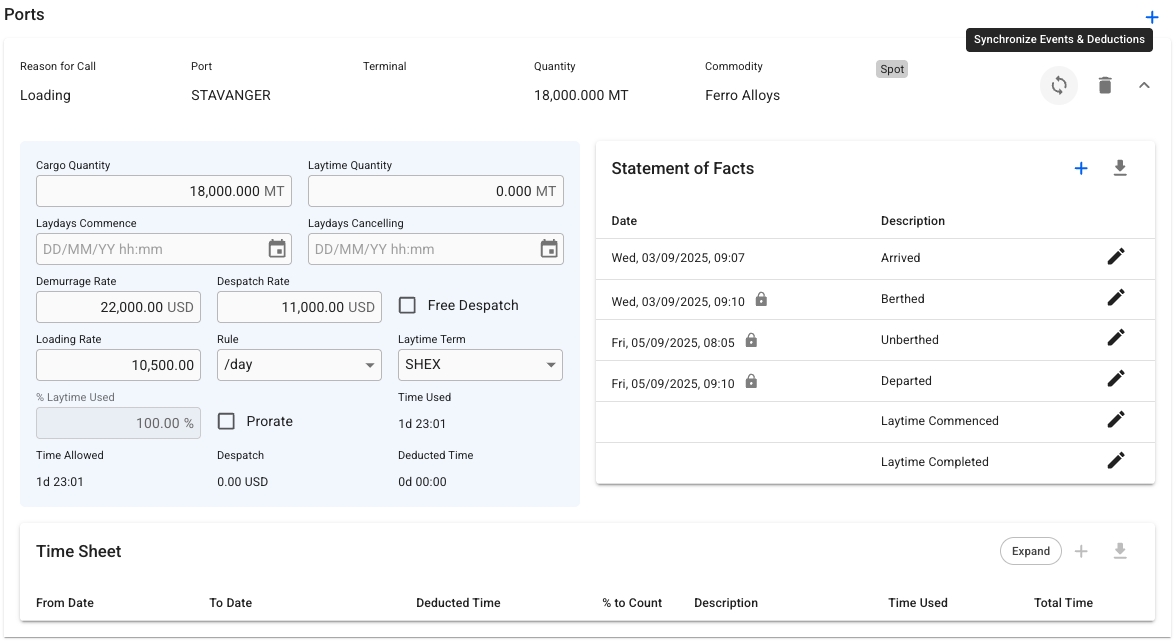
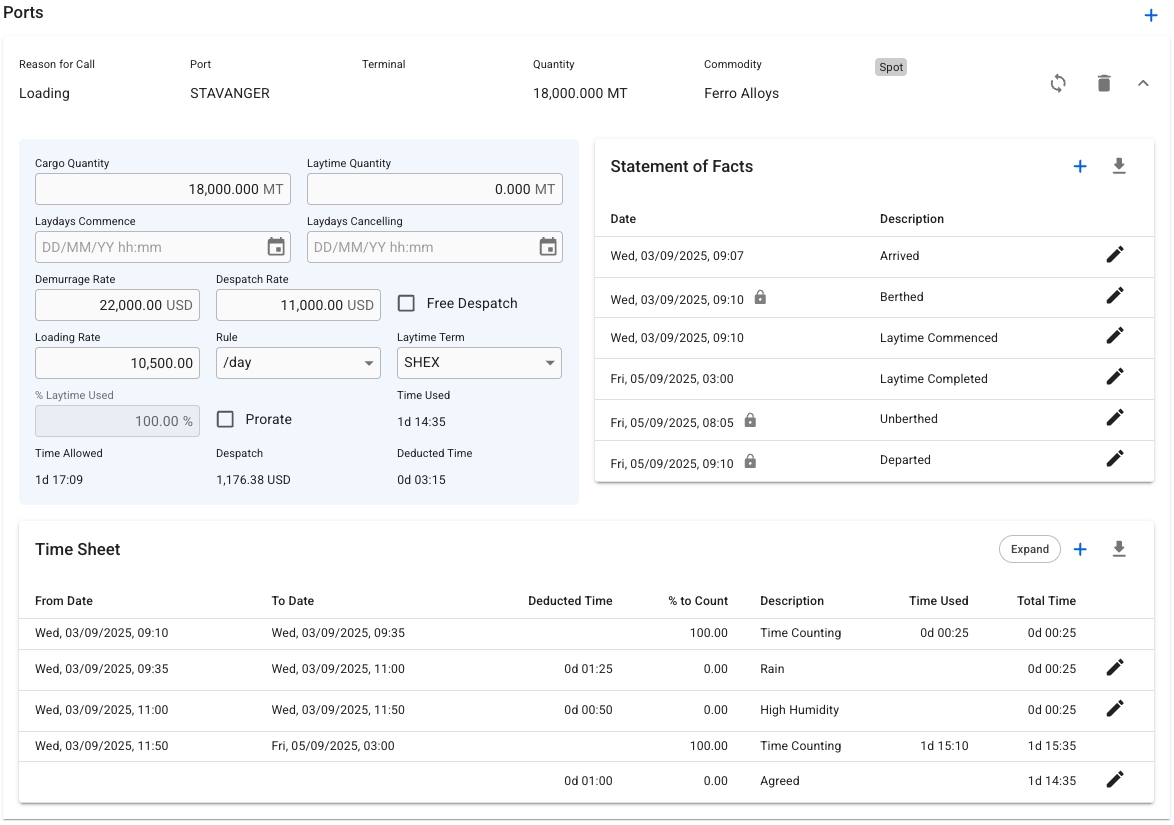
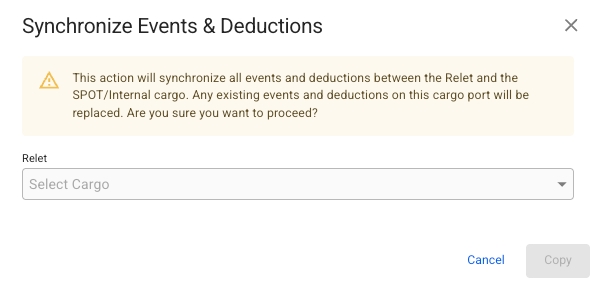
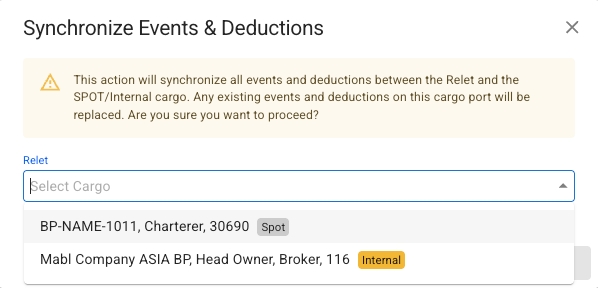
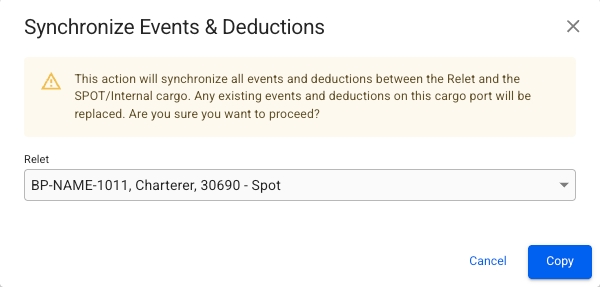
For example, if you click 🔄 'Synchronize Events & Deductions' on a SPOT (ref. figure 2), all events from the Relet cargo (ref. figure 1) will be copied to the SPOT (ref. figure 3).
To synchronize a relet with its corresponding spot cargo, follow these steps:
Open the tab in the Voyage Drawer.
Expand the Laytime Calculations to access the Cargo Port Panel List.
In the Cargo Port Panel List, a Synchronize Events and Deductions button will be available for all relet, internal and corresponding spot cargo ports.
To make it easier to identify which cargoes are relet and connected to a spot cargo, a chip has been added to the section header. See the figures below.
When copying synchronizing the events and deductions, existing events and deductions will be overwritten!
To prevent accidental overwrites, a confirmation modal will appear with a brief explanation. You must confirm your choice before synchronization. See Figure 7.
If there is only one cargo port to synchronize from, it will be preselected. If multiple cargo ports are available, a dropdown menu will appear, allowing you to choose which cargo to copy from.
Deleting either the relet or its connected spot cargo does not affect the other. Synchronization only occurs when you manually click the button and confirm the action.
Demurrage Rate
The rate for demurrage
Despatch Rate
The rate for despatch
Free Despatch
Checkbox for Free Despatch
Loading/Discharging Rate
Loading/discharging rate on a port, depending on type of port
Rule
The rule for the selected port
Laytime Terms
Laytime terms for the selected port
Share of Laytime Used
Percentage of laytime used
Prorate
Checkbox for Prorate
Time Used
The amount of laytime used on the selected port
Time Allowed
The amount of laytime allowed for the selected port
Demurrage
The amount of demurrage for the selected port (only if Demurrage)
Despatch
The amount of despatch for the selected port (only in non-reversible)
Time Lost
The amount of time lost in the selected port (only if Demurrage)
Deducted Time
Total amount of "Time not to count" on port (only in non-reversible)







Time Not To Count List
The cargo port panel contains a list of all periods not to be counted.
Time to count can also be viewed in the table and are calculated after each new not to count period is added. They are not editable.
Click the create icon on top of the list.
Fill in all required fields listed below in the Add Time Not to Count window.
Click Create.
Click the edit icon on the right side of the not to count row.
Change the fields in the Edit Time Not to Count window.
Click Save.
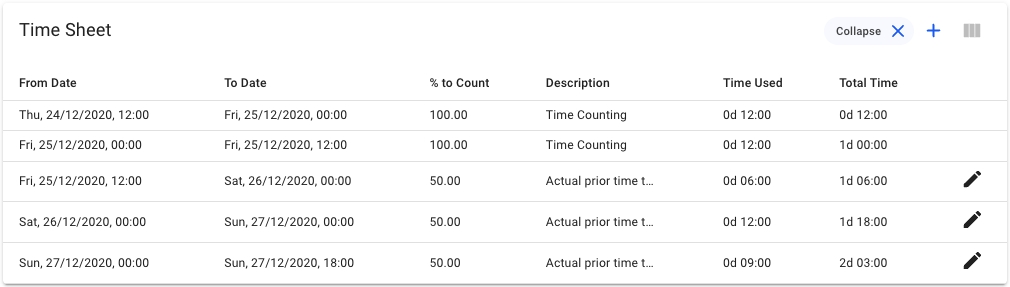
This is the default view of the Timesheet table. This view shows a collapsed view of the Timesheet items, in which each item has a span of laytime commenced to laytime completed. The stoppages added (the time not to counts) will be shown in their own separate rows:
By clicking on the Expand icon on the right side, the list will show all Timesheet items occurrences.
This detailed view shows all the Timesheet occurrences of the Laytime Calculation. Here, each item shows the list items day-by-day:
By clicking on the the Collapse icon on the right side, the list will go back to compress all the Timesheet items into one-line time period:
Fields
Description
From Date
Start of not to count period
To Date
End of not to count period
Deducted Time
Amount of time to deduct
% Not to Count
Percentage specifying the % of time not to count
Reason for Stoppage
The reason for the stoppage
Description
Additional description for the not to count